How to Block the YouTube App on Android Without Deleting It
Written by Mouhsine
Admin
Published October 21, 2026 · Updated November 10, 2026
YouTube is tricky to give up because the same app you use for tutorials, lectures, and troubleshooting can also pull you into recommendations and Shorts. You might want access to one useful video without spending the next hour watching something else.
The good news is that you don't have to delete YouTube to put a boundary around it. On Android, you can set a daily app timer, pause YouTube while you study, use YouTube's built-in Shorts limit, or manage distracting apps with a separate blocker. You can also disable the preinstalled YouTube app on some phones if you don't need it at all.
Quick answer: To limit the YouTube app on Android, open Settings → Digital Wellbeing → App timers, find YouTube, and choose a daily time allowance. Android pauses the app when that allowance is used up. For a temporary break, select YouTube in Digital Wellbeing → Focus mode. To reduce Shorts specifically, YouTube offers a separate Shorts feed limit, including a zero-minute option—but you can ignore that reminder.
This guide focuses on controlling your own native YouTube Android app. Blocking YouTube ads, individual channels, or the desktop website is a different task.
Which YouTube Blocking Method Should You Choose?
| What you want | Best starting point | Important limitation |
|---|---|---|
| Limit YouTube to 20–30 minutes a day | Android Digital Wellbeing App Timer | A standard timer can be changed or removed |
| Keep YouTube out of the way during study or work | Android Focus mode | You can temporarily take a break |
| Cut back on Shorts but keep regular videos | YouTube Shorts feed limit | Even zero minutes is a dismissible reminder |
| Stop using a preinstalled YouTube app | Disable the app, if available | It can be re-enabled |
| Manage YouTube alongside other distracting apps | Mindova for Android | Requires setup and permissions |
Start with the built-in option that matches your goal. A third-party app isn't necessary if Android's own controls already work for you.
Method 1: Set a Daily YouTube App Timer With Digital Wellbeing
Digital Wellbeing is Android's built-in system for reviewing screen time and setting boundaries around individual apps. Unlike a YouTube reminder, an Android App Timer acts on the installed application itself.
Step 1: Open Digital Wellbeing
- Open your Android phone's Settings.
- Select Digital Wellbeing or Digital Wellbeing & parental controls.
- Open App timers. On some phones, you can also tap YouTube in the usage dashboard to find its timer.
Menu names may differ slightly on Samsung, Pixel, and other Android devices.
Step 2: Select YouTube
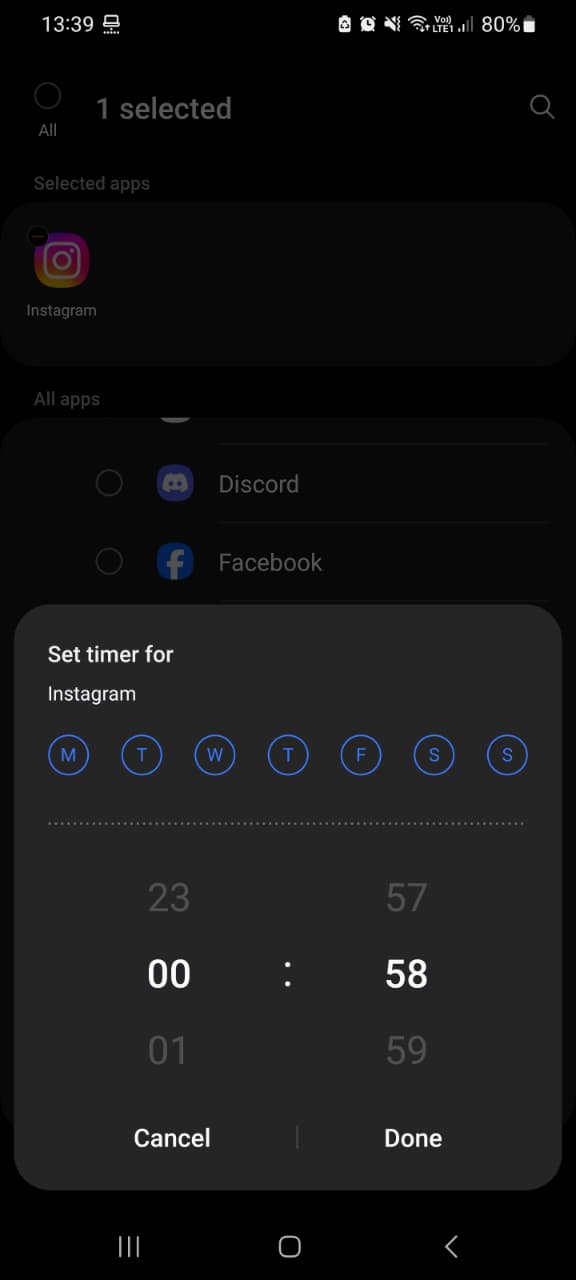
Find YouTube in the installed-app list and tap Set timer, or the timer control shown beside the app. Make sure you select YouTube, not YouTube Music, YouTube Kids, or Chrome. Those may appear as separate apps, with separate usage controls.
Step 3: Set an allowance
Choose the amount of time you want YouTube to be available each day.
For example, 20 minutes may be enough to watch one planned video, while 45 minutes may be more appropriate if you regularly need tutorials or lessons.
Tap OK or Set, depending on your device.
What happens when the timer runs out?
Google explains that Android closes the app and dims its icon when the allotted time is exhausted. App timers normally reset at midnight. A standard app timer can also be changed or deleted in Settings, so it isn't a permanent lock.
If you keep removing the timer to watch more videos, check whether your device supports an App limits PIN.
Can you protect the YouTube timer with a PIN?
On supported devices, go to:
Settings → Digital Wellbeing → App limits → App limits PIN
Follow the instructions to create a four-digit PIN. Google also documents a zero-time app limit for restricting another device user's access when a PIN is configured.
That setting is not available on every device or Android version, and PIN controls should not be confused with an impossible-to-bypass restriction. Official source: Google — Manage your time with Digital Wellbeing.
Method 2: Pause YouTube During Study or Work With Focus Mode
A daily limit controls how much YouTube you use. Focus mode controls when you can reach it. This is useful if you need YouTube for a class later, but don't want to open it while you're writing, revising, or working on something that requires uninterrupted attention. To pause YouTube:
- Open Settings → Digital Wellbeing → Focus mode.
- Select YouTube in the list of distracting apps.
- Tap Turn on now.
- If your device supports it, use Set a schedule for regular study or work periods.
Android pauses the apps selected for Focus mode and silences their notifications while the mode is active. You can also use Take a break to temporarily unpause them.
Which is better: App Timer or Focus mode?
Use an App Timer if you're trying to reduce your total daily YouTube time.
Use Focus mode if YouTube should be available later but not during a particular task. You can combine them if both problems apply.
Method 3: Set YouTube's Shorts Feed Limit to Zero
Here's an important difference: perhaps regular YouTube videos are useful to you, but the Shorts feed is where your time disappears. YouTube has a separate Shorts feed limit, and its official instructions include an option to set the limit to zero minutes. To configure it:
- Open the YouTube app and sign in.
- Tap the You tab, then Settings.
- Select Time management.
- Tap Shorts feed limit.
- Choose 0 minutes, or another limit you prefer.
Does zero minutes completely block YouTube Shorts?
No.
YouTube says that when the Shorts feed limit is reached, a message appears and you can dismiss or ignore it. A zero-minute setting is therefore a prompt to stop—not a guaranteed removal of every Short or a locked, inaccessible feed.
That distinction matters if your goal is to keep longer videos available while avoiding endless short-form scrolling. Try the native setting first, but don't mistake it for a strict blocker.
If you want a different kind of interruption, YouTube also has a Take a break reminder. It temporarily pauses video playback until you dismiss the reminder or resume watching; it doesn't block the whole app.
Official sources: YouTube — Set a Shorts feed limit and YouTube — Take a break reminder.
Method 4: Disable the Preinstalled YouTube App on Android
Some Android phones come with YouTube preinstalled. On these devices, you might not have a normal Uninstall option, but you may be able to disable the app.
If your phone offers that option:
- Open Settings → Apps (or Apps & notifications).
- Find YouTube and open its app information page.
- Tap Disable, if the button is available.
- Review any warning from your phone before confirming.
Disabling is different from uninstalling. It can make the application unavailable on that device until you enable it again, but it does not automatically block youtube.com in your mobile browser. Not every manufacturer lets you disable the same preinstalled apps.
If you regularly depend on YouTube for classes or troubleshooting, an App Timer may be more practical than disabling it completely. Official source: Google — Disable apps that came with your Android device.
Method 5: Manage YouTube With Mindova for Android
Maybe YouTube isn't your only distraction. Instagram, TikTok, and other apps might all compete for your attention, and managing separate controls for every app becomes inconvenient.
Mindova for Android is built around managing selected distracting Android apps. Its confirmed features include individual daily app limits, an overall Daily Distraction Limit, Focus Sessions, and usage insights.
Step 1: Set up the Android app
Install Mindova: Focus & App Blocker on Google Play, sign in, and follow the app's setup prompts.
Review the permissions requested by the installed version. Android app blocking depends on the permissions and device configuration.
Step 2: Select the app you want to manage
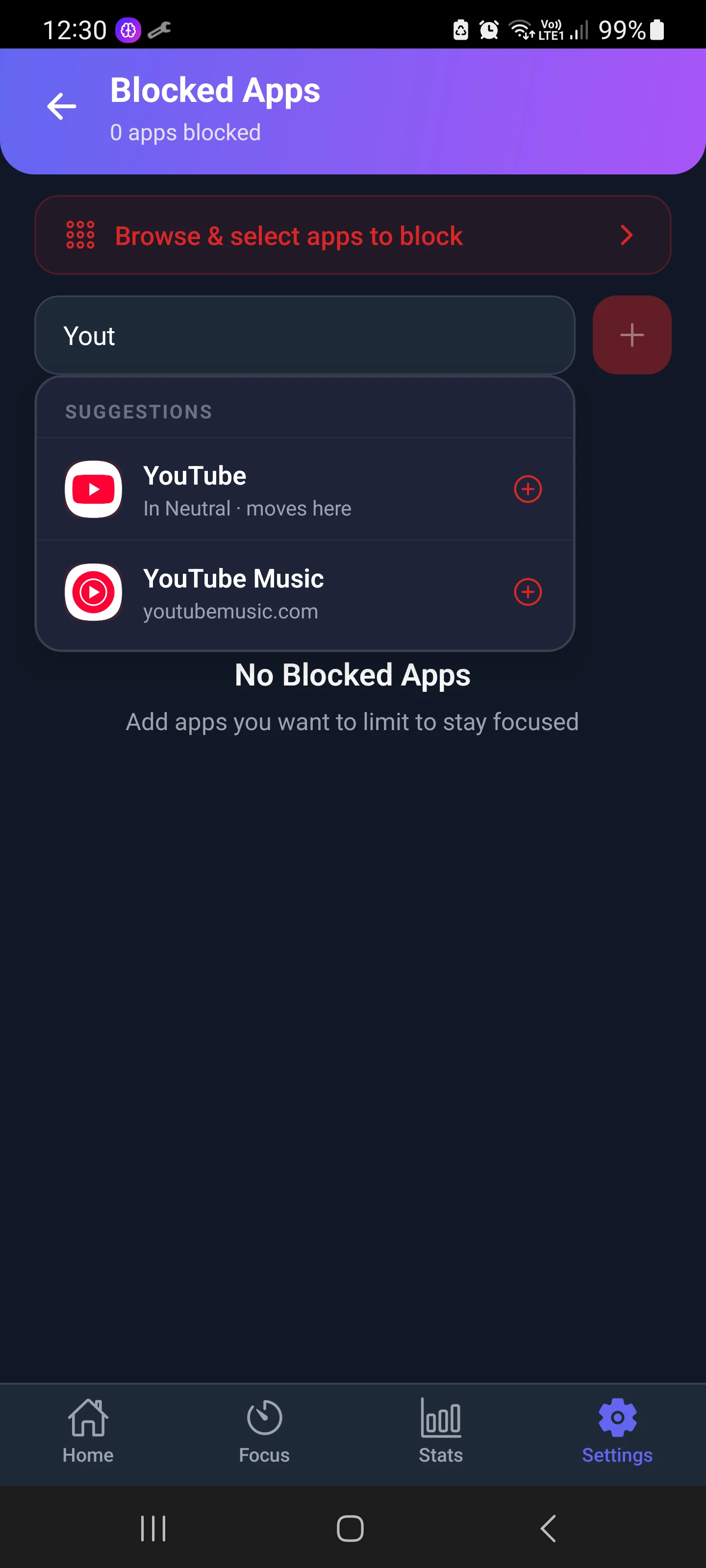
Open Mindova's app-management section and review your installed applications. If YouTube appears in the supported list, select it as a distracting app.
Step 3: Choose a YouTube limit
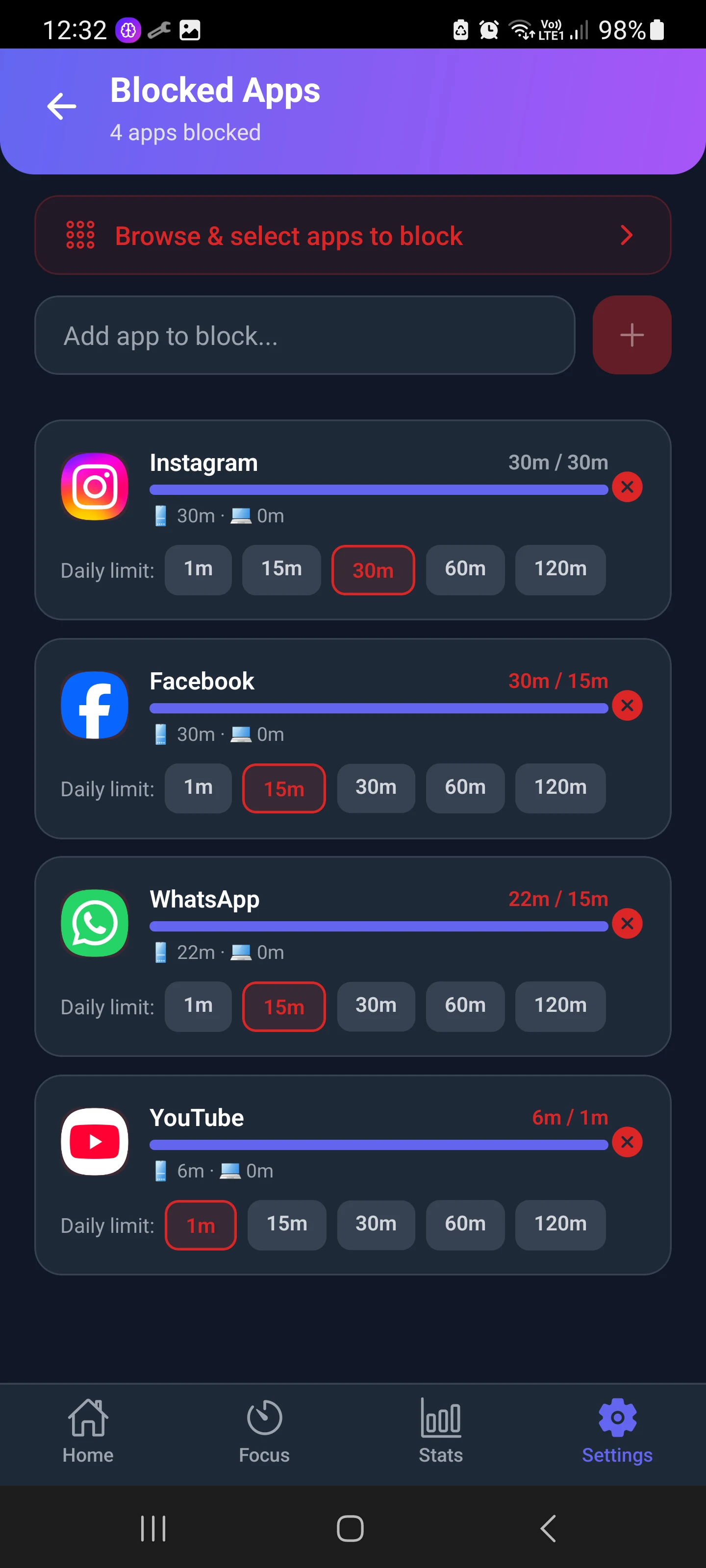
Configure an individual daily allowance for YouTube. This lets you keep useful videos available for a defined period instead of leaving the app open-ended.
Mindova also supports a combined Daily Distraction Limit if you want a shared allowance across the apps you've classified as distracting.
What has actually been tested?
We have documented an Android blocking test with Instagram: after its configured daily allowance was used, Mindova interrupted normal access and showed a limit notification.
That is verified evidence for the general Android blocking workflow, not a claim that we personally completed a separate YouTube test.
The YouTube-specific screenshots and any statement about exactly what appears when YouTube reaches its limit should be added only after testing on a real Android phone.
See the broader Mindova App Blocker guide for the product's supported features and actual Android screenshots.
If you only need one basic YouTube timer, Android Digital Wellbeing may be all you need.

Block distractions. Stay focused with Mindova.
Block distracting websites and apps, set limits, and protect your focus time across your browser and phone.
Free plan, no credit card • Try Pro free for 7 days
Does Blocking the YouTube App Also Block YouTube in Chrome?
Not automatically.
The YouTube app and the YouTube website are separate ways to access the service.
A rule applied to the installed Android app does not prove that youtube.com is blocked inside Chrome or another mobile browser. For the mobile website, Google's Digital Wellbeing documentation describes Chrome website timers on supported devices.
You can go to Settings → Digital Wellbeing → the usage chart → Chrome, then set a timer for youtube.com if that website appears in your list. To block youtube.com in a desktop browser, see how to block YouTube on Chrome.
Also remember that YouTube Music and YouTube Kids, if installed, are distinct apps. A limit on the main YouTube app should not be assumed to cover them.
YouTube Still Opens After You Set a Limit? Try These Checks
The timer hasn't run out. An App Timer permits access while you still have time remaining. Check today's YouTube usage in Digital Wellbeing. The allowance reset. Standard Android App Timers normally reset at midnight, so the app may become available again the next day.
You used a YouTube reminder instead of an app restriction. Shorts feed limits and Take a break reminders can be dismissed or ignored; they are not whole-app locks. Focus mode is off or paused. Make sure YouTube is selected, Focus mode is active, and you haven't started a temporary break.
You're using the browser. Check whether you're opening the YouTube app, youtube.com in Chrome, or a different app such as YouTube Kids.
A third-party blocker isn't applying your rule. Confirm that YouTube is selected where supported, the intended allowance is saved, and the required Android permissions are active. If the behavior still differs, contact the app's support team.
For general Android blocking methods beyond YouTube, see How to Block Apps on Android.
Frequently Asked Questions
Can I block YouTube on Android without deleting it?
Yes. Use Android's App Timer to close and pause YouTube once its daily allowance is used, or Focus mode to pause it during selected periods. You can keep the app installed with either method.
How do I block YouTube for a few hours while studying?
Go to Settings → Digital Wellbeing → Focus mode, select YouTube, and turn Focus mode on. You can configure a schedule on supported devices.
Can I block only YouTube Shorts on Android?
YouTube offers a Shorts feed limit, including zero minutes.
However, YouTube lets you dismiss or ignore the limit, so this is not a strict Shorts-only block. The Mindova Android app-blocking workflow described here does not selectively remove Shorts while leaving every other part of YouTube unrestricted.
Can I put a PIN on the YouTube app timer?
Some Android devices support App limits PIN in Digital Wellbeing. Look under Settings → Digital Wellbeing → App limits → App limits PIN. Availability and exact menus vary by device.
Can I disable YouTube if it came with my Android phone?
On some phones, yes.
Open Settings → Apps → YouTube and look for Disable.
If the option is not available, your device may not support disabling that app.
Will blocking the YouTube app also block the YouTube website?
No automatic coverage should be assumed. The native YouTube application and youtube.com in a browser may need separate restrictions.
Can Mindova block YouTube Shorts without blocking YouTube videos?
Not through the confirmed Android native-app controls described here. Mindova manages selected apps rather than individual YouTube feeds or video formats.
Keep YouTube Useful Without Letting It Take Over
You don't necessarily need to remove YouTube from your phone to spend less time on it.
If you need occasional lessons and tutorials, try a daily App Timer. If YouTube is interrupting your work, use Focus mode. If Shorts are the main problem, start with YouTube's own Shorts feed limit while understanding that it can be dismissed.
And if several apps are distracting you, Mindova for Android gives you another way to organize daily limits and focus tools across selected apps.
The useful boundary is the one that fits what you still need YouTube for—and makes it easier to stop when you've finished.
Less scrolling. More focused time.
Use Mindova to block distracting websites and apps, set daily limits, and create protected time for studying, working, or deep focus.
- Android AppBlock and limit distracting apps on Android.
- Browser ExtensionChrome, Edge, Brave, Opera & Vivaldi
- iPhone AppControl distracting apps and protect your focus on iPhone.


Start free — no credit card needed. Try Pro free for 7 days whenever you like.
Mouhsine
Admin
Passionate about helping people achieve peak mental performance through evidence-based strategies and mindful technology use.
Related Articles
How to Block X (Twitter) on Android Without Deleting It
Block the X (Twitter) app on Android without deleting it. Use App timers, Focus Mode, Mindova or Private DNS, with step-by-step instructions.
Brick Alternatives (2026): Cheaper and Free Ways to Block Apps on Android
Brick costs $59 and needs a puck you tap. Compare cheaper NFC cards, free open-source blockers and app-only options for Android, with official prices and honest trade-offs.
How to Block the Facebook App on Android Without Deleting It
Block or limit the Facebook app on Android without deleting it: app timers, Focus mode, disabling, archiving, and daily limits with Mindova.
Comments
Be the first to comment.